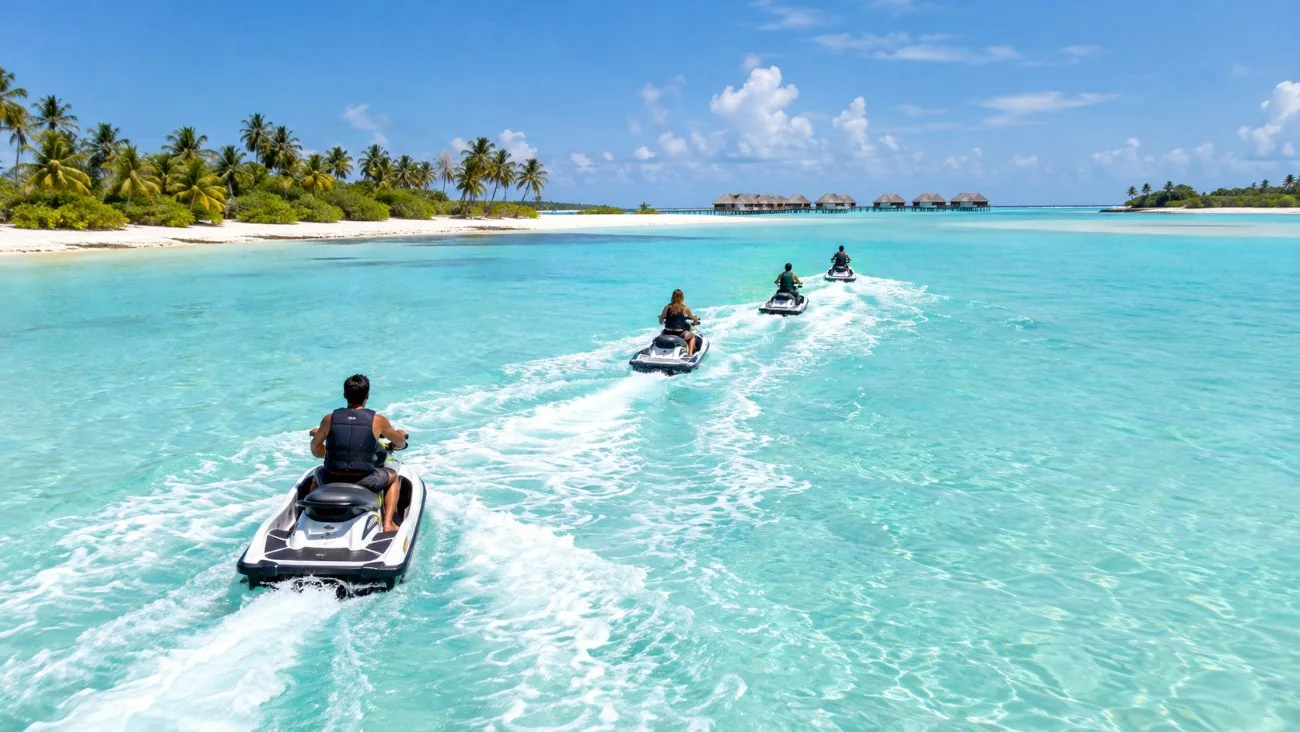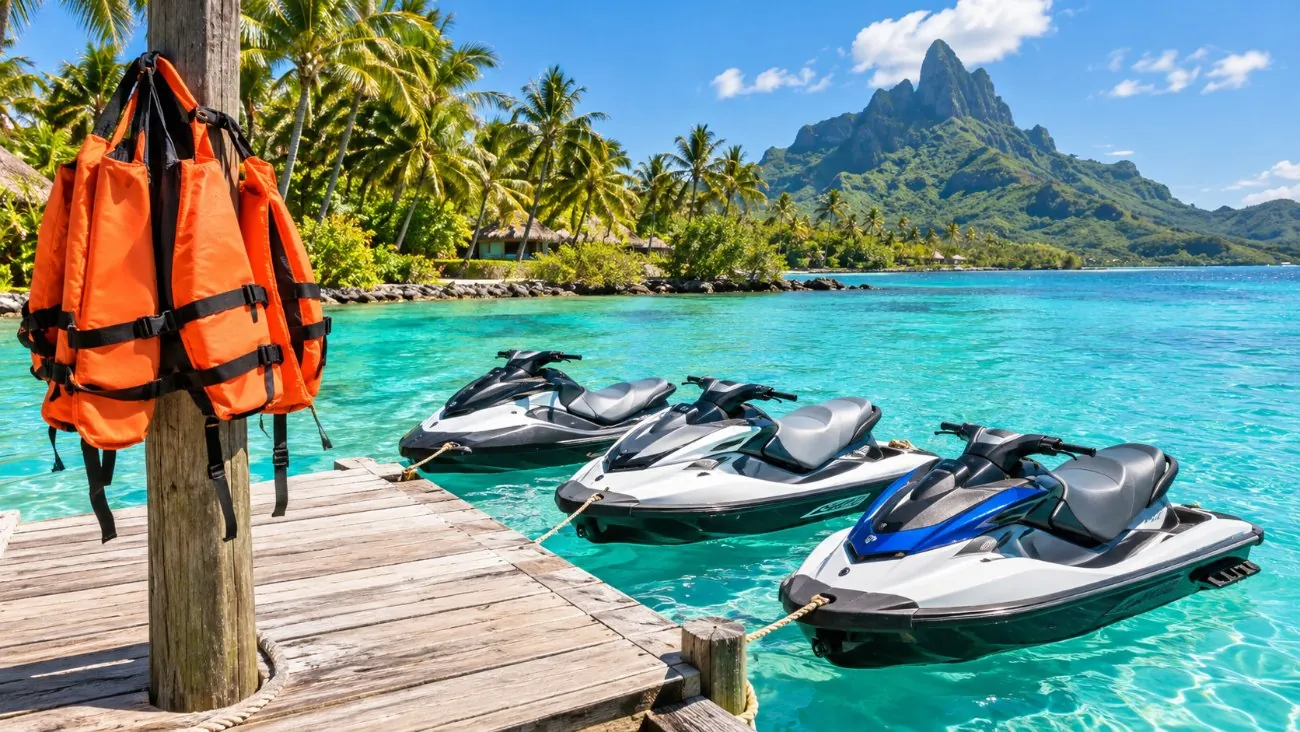
Booking choice: The jet ski, lunch and shark and ray safari, 6 hours. Book this Tour details
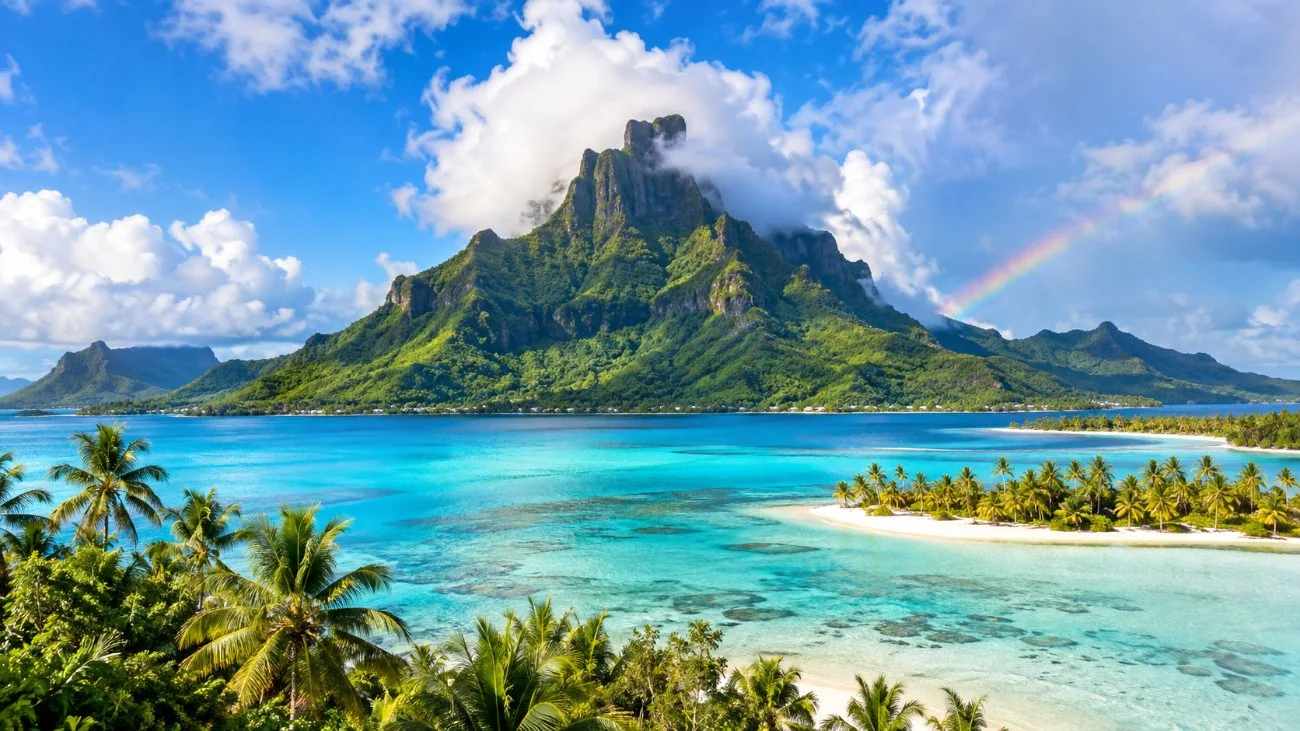
The Bora Bora lagoon is shallow, warm and clear, and it holds more large animals than most people expect. French Polynesia has been a shark sanctuary since 2006. Scientists list the island as an Important Shark and Ray Area for its eagle rays and manta rays.
This guide covers which sharks and rays you might see, how risky it is to swim with them, why the tours here do not feed them, and which tours to book if seeing them is the point of your day.
The quick answer
Yes, there are sharks in Bora Bora: blacktip reef sharks are the most common, and snorkel tours swim near them in shallow water. You can also see stingrays, spotted eagle rays and reef manta rays. Feeding or luring them is prohibited, and sightings are not guaranteed. For a jet ski and a snorkel in one day, book the jet ski, lunch and shark safari.
Does Bora Bora have sharks?
Yes. Blacktip reef sharks are the most common, and lemon sharks, whitetip reef sharks, tiger sharks and whale sharks have also been recorded around the island.
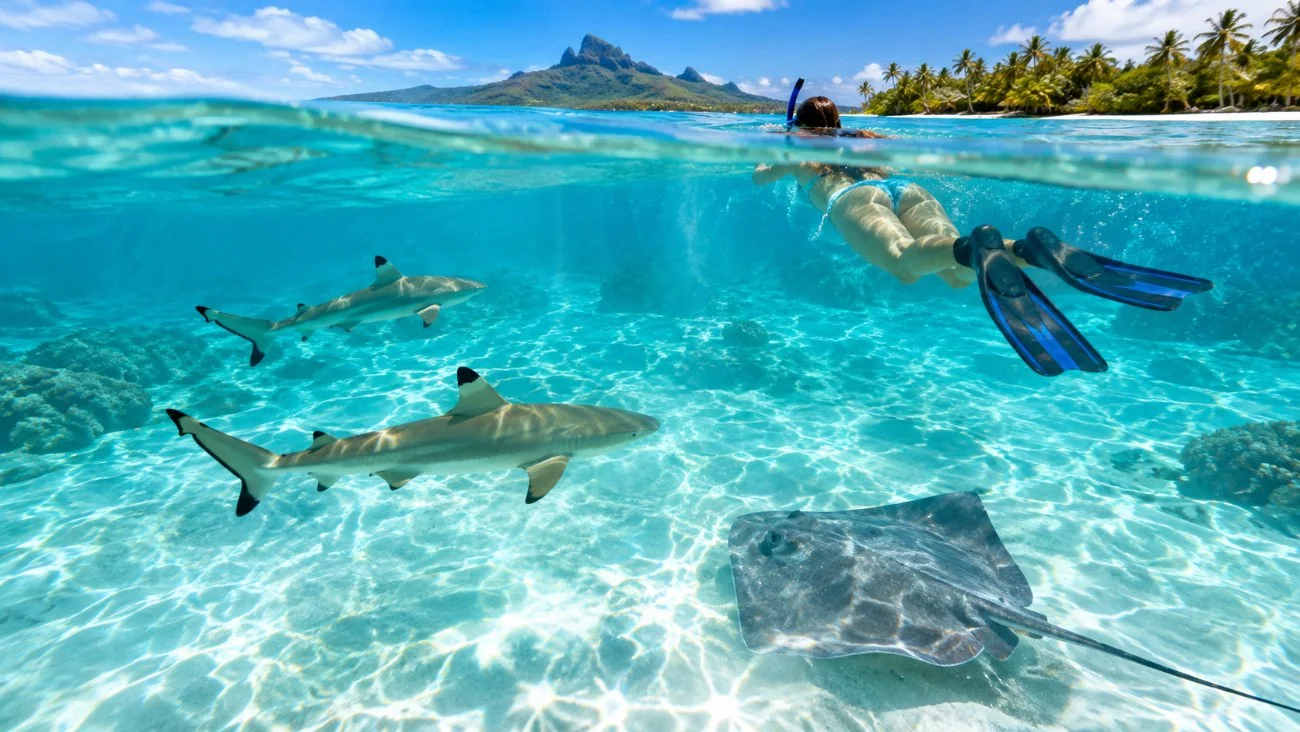
The Important Shark and Ray Area factsheet for Bora Bora records the blacktip reef shark, the whitetip reef shark, the sicklefin lemon shark, the tiger shark and the whale shark. Snorkel tours in the lagoon look for the blacktips, which live close to shore, in the lagoon and on the reef. The others are rarer sights.
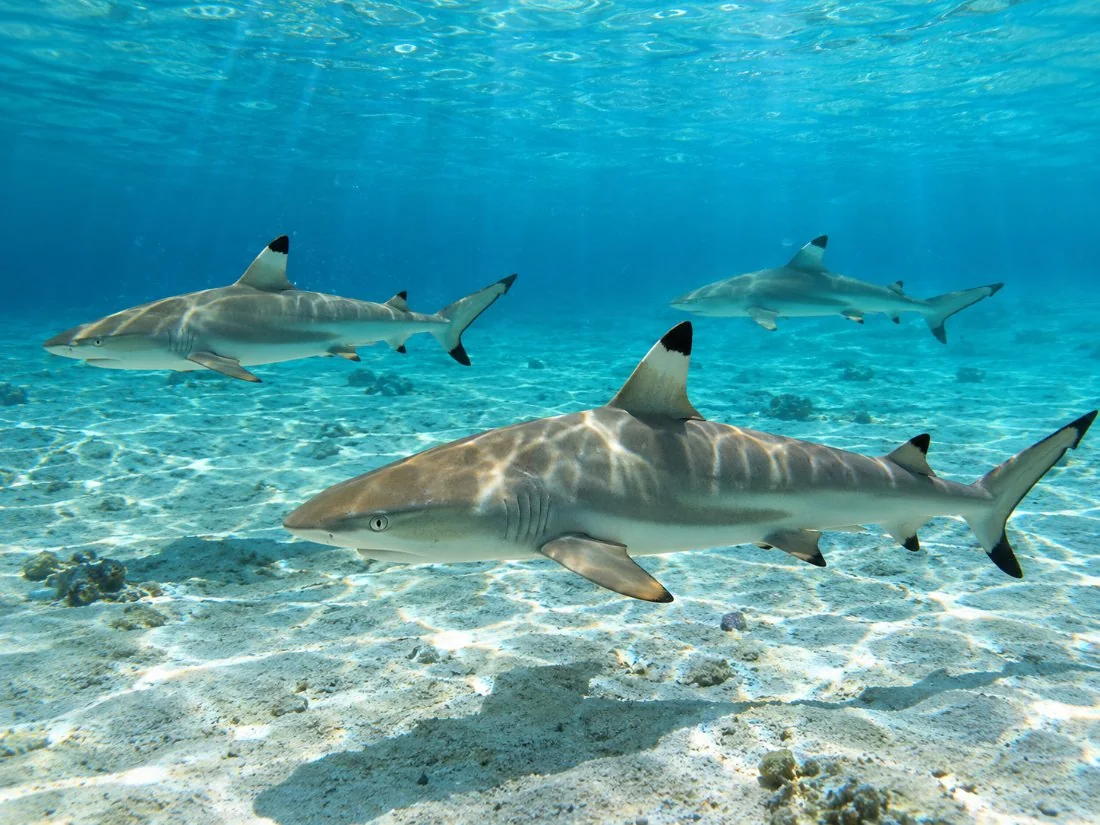
What is the most common predator in Bora Bora?
In the lagoon, the blacktip reef shark. It is the shark you are most likely to see from the surface or with a mask.
Blacktips hunt small fish over sand and coral, and they are used to boats passing over them. On the jet ski and shark safari the powerboat takes you to a shallow part of the lagoon that blacktip reef sharks frequent, per the listing. One guest wrote: "The combined jet ski and snorkeling tour was really awesome!"
Are the sharks in Bora Bora dangerous?
The lagoon reef sharks are generally shy, and snorkel tours swim near them regularly. Treat them as wild animals: follow the guide, keep your hands to yourself and do not chase them.
Most of the risk on a snorkel trip has nothing to do with sharks. It is sunburn, swallowed water, a cut from coral, or a sting from stepping on something in the sand. Shuffle your feet when you stand in the shallows, wear a top in the water, and stay with the group.
The guides know where the animals gather. Do what they say, get back on the boat when they call, and keep a little distance from the rays as well as the sharks.
Two hours on the jet ski, lunch, then a powerboat to the blacktips and rays, with snorkel gear included and no feeding.
Book thisWhich rays can you see in the Bora Bora lagoon?
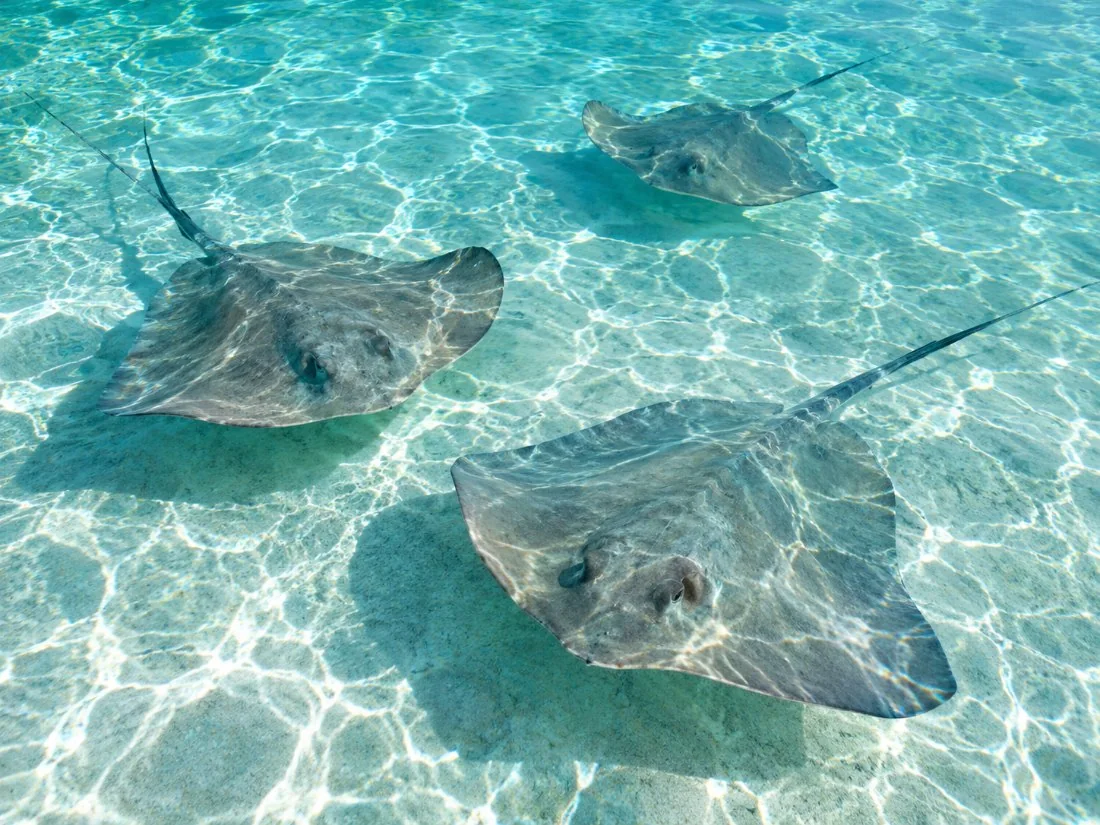
Stingrays (pink whiprays) over the sand, spotted eagle rays, and reef manta rays at cleaning stations such as Anau, on the east side.
The ISRA factsheet gives Bora Bora its status for two species: the spotted eagle ray, listed as endangered, and the reef manta ray, which uses the lagoon to breed. It also records the pink whipray, the large grey stingray that glides over the white sand on snorkel stops.
Reef mantas visit cleaning stations, where small fish pick parasites off them. Anau, at the east tip of the island, is the best-known, and Air Tahiti Nui names it as the place for mantas. They are wild and they come and go. On the sharks snorkel, one guest wrote that "Our guide knew immediately where to find the manta rays". Another day, the mantas may not show.
Are sharks and rays fed on Bora Bora snorkel tours?
Not on the tours here. Feeding or attracting sharks and rays is listed as prohibited in French Polynesia, and the operators say they do not feed them.
Guidance from Tahiti Tourisme and the environment directorate, summarised by Noonsite, lists attracting wild species with gestures, sounds or food, and feeding rays or sharks, as prohibited. Sharks, manta rays, turtles and marine mammals are protected species. The listing for the shark safari day says it respects marine life with no feeding. The lagoon safari does not allow feeding animals, and the snorkel and jet ski day does not allow touching marine life.
Without bait, the animals behave on their own terms. That is the point, and it is also why sightings are not guaranteed.
Which tours take you snorkelling with sharks and rays?
Four tours on this site include a snorkel stop for sharks and rays. Two of them add a jet ski ride.
The two-hour jet ski loops do not include a snorkel stop for sharks, and their listings do not promise them. If seeing blacktips matters, book one of the four above.
| Tour | Length | Jet ski | Snorkel part | Lunch |
|---|---|---|---|---|
| Jet ski, lunch and shark safari | 6 hours | 2 hours | 2.5 hours by powerboat, blacktips and rays | At a restaurant on the main island |
| Snorkel and jet ski day | 6 hours | Length not stated | 3 hours: coral garden, manta and blacktip spots | Polynesian lunch on a motu |
| Full-day lagoon safari | 6 hours | No | Rays and blacktips, a manta spot, a coral garden | Picnic on a motu |
| Eco shark and snorkel safari | 2.5 hours | No | Several stops, coral garden near the reef | Light food and drinks |
From the GetYourGuide listings as read in October 2026. Wildlife sightings depend on the day.
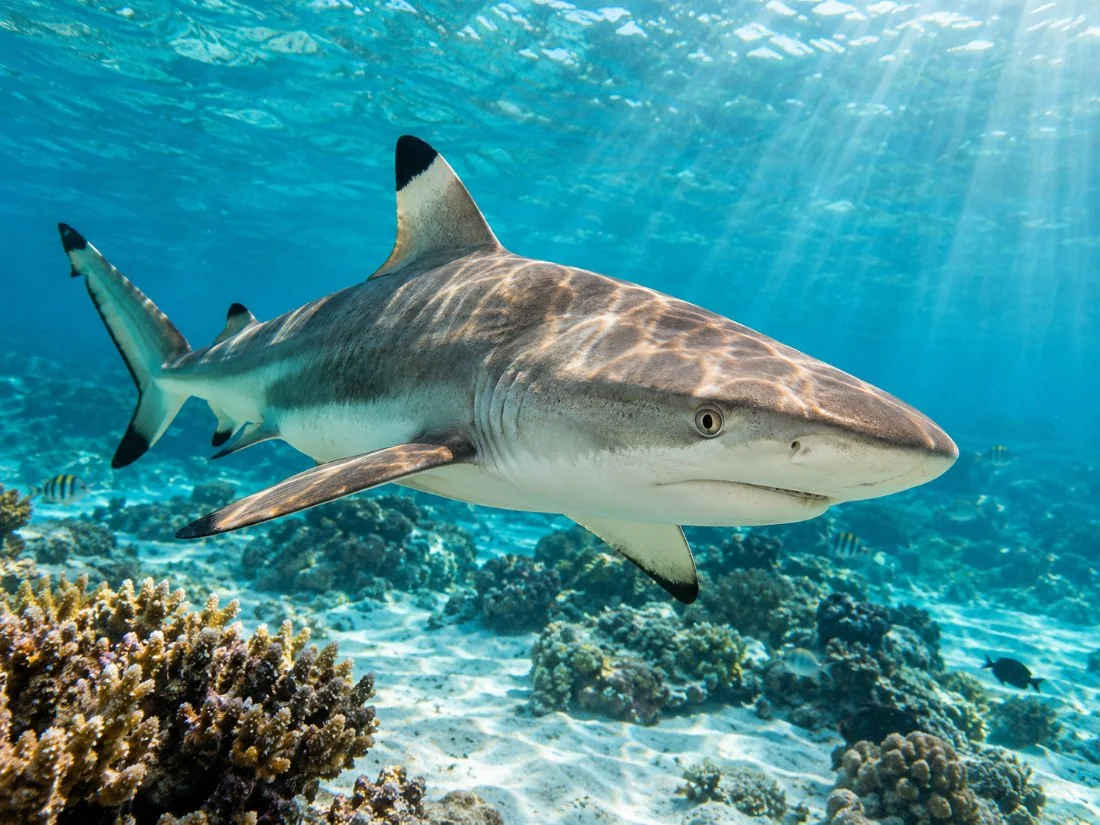
An afternoon motorboat with several snorkel stops for blacktip reef sharks, rays and the coral garden by the reef. Mask and fins included.
Book this Tour detailsHow should you behave around sharks, rays and coral?
Look, do not touch. Keep your fins off the coral, give the animals space and follow the guide's briefing.
- Hands off: no touching, chasing or holding sharks and rays. The snorkel and jet ski day lists touching marine life as not allowed.
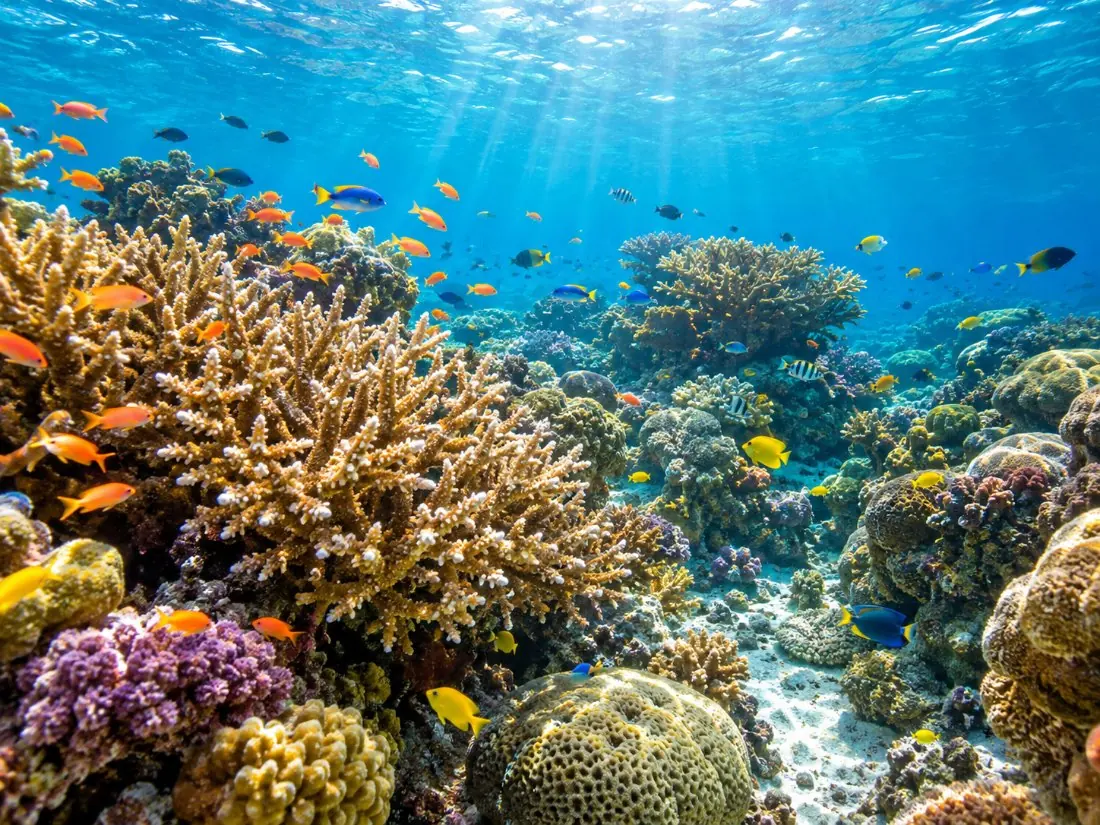
- Mind the coral: stand only on sand, and float flat over the coral garden.
- Fins that fit: the lagoon safari asks for your fin size when you book.
- No food in the water: do not throw scraps from the boat or the motu.
- Feet first: water shoes help on the motu and in the shallows. The lagoon safari lists them among things to bring.
Is French Polynesia a shark sanctuary?
Yes. Since April 2006 its whole exclusive economic zone, about 5.5 million square kilometres, has been a shark sanctuary. Catching sharks to kill them and trading shark parts are banned.
The sanctuary covered every species except the shortfin mako at first, and the mako was added about six years later, per Mongabay. The rules on attracting and disturbing protected species carry fines and possible prison terms. For a visitor, the effect is simple: the sharks you see in the lagoon are protected, and the tours are built around watching them.
Frequently asked questions
Can you see sharks from a jet ski?
The two-hour jet ski listings do not promise it, and their stops are for swimming and the motu. For blacktip reef sharks, book a tour with a snorkel stop.
Are shark and ray sightings guaranteed?
No. The safari listings say marine life cannot be guaranteed, and the shark snorkel listing says there is no refund if no animals are seen.
Are there tiger sharks in the Bora Bora lagoon?
Tiger sharks are recorded around Bora Bora, per the ISRA factsheet, but they are not what the lagoon snorkel tours visit. The tours look for blacktip reef sharks and rays.
Do I need to be a strong swimmer for a shark snorkel?
You need to be at ease in the water. The snorkel and jet ski day is not suitable for non-swimmers. If you are unsure, tell the guide before you get in.
Ready to book
Choose your tour
Each option opens on GetYourGuide with the operator named and the inclusions listed.
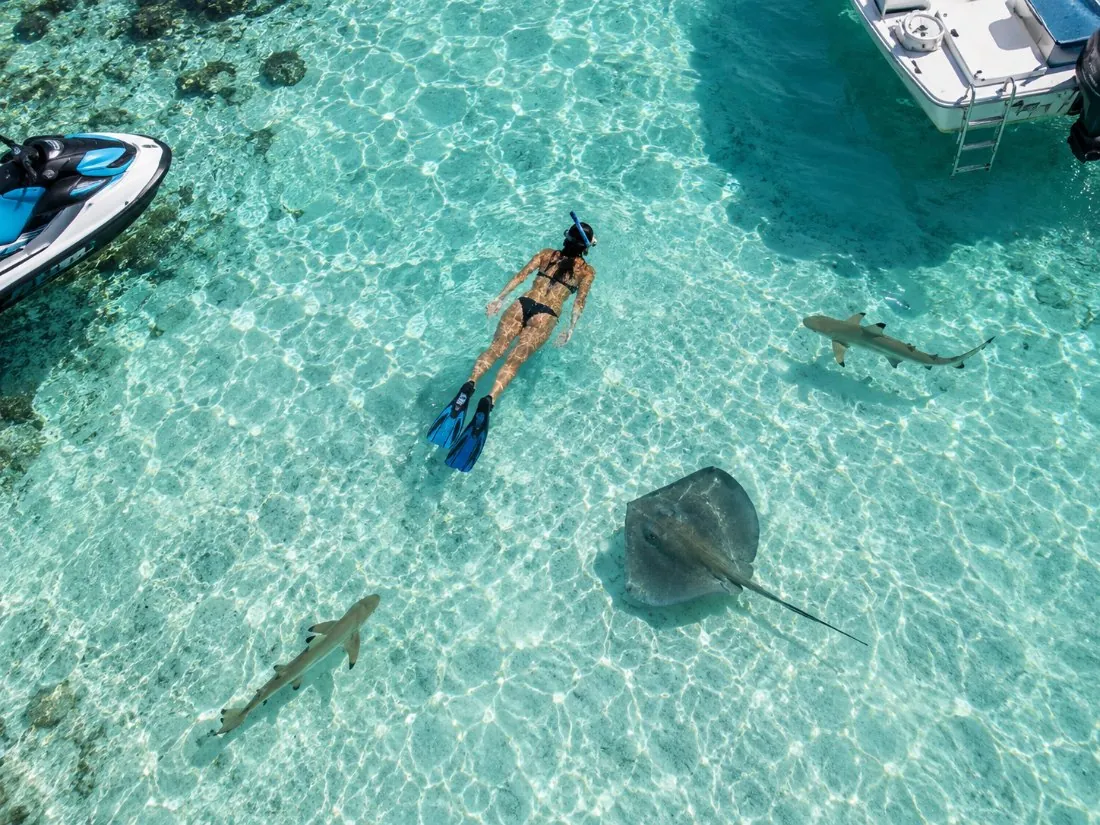
Jet Ski, Lunch & Shark and Ray Snorkel Safari
- Hotel pickup and drop-off
- A two-hour guided jet ski tour of the island
- Lunch at a restaurant on the main island
Eco Shark and Snorkeling Safari
Blacktip reef sharks, rays and a coral garden by the reef
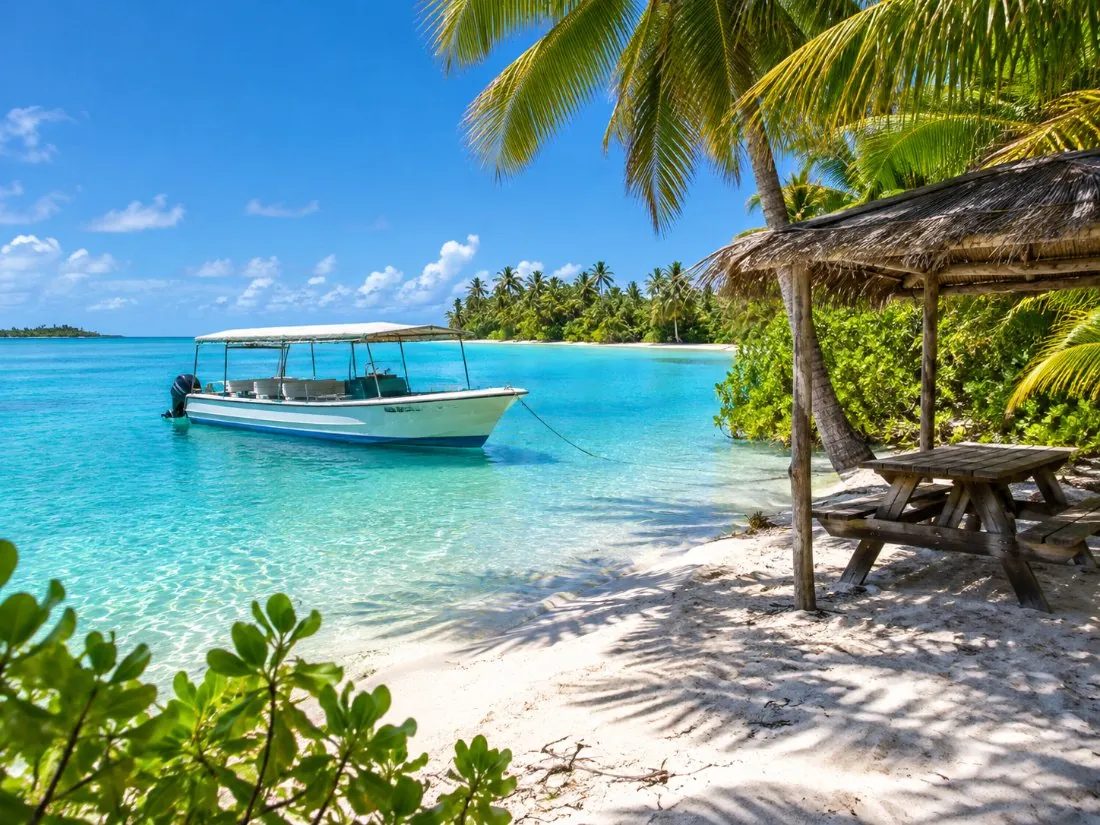
Full-Day Lagoon Safari & Lunch on a Motu
The lagoon from a boat instead of a jet ski: rays, reef sharks, coral and a motu picnic