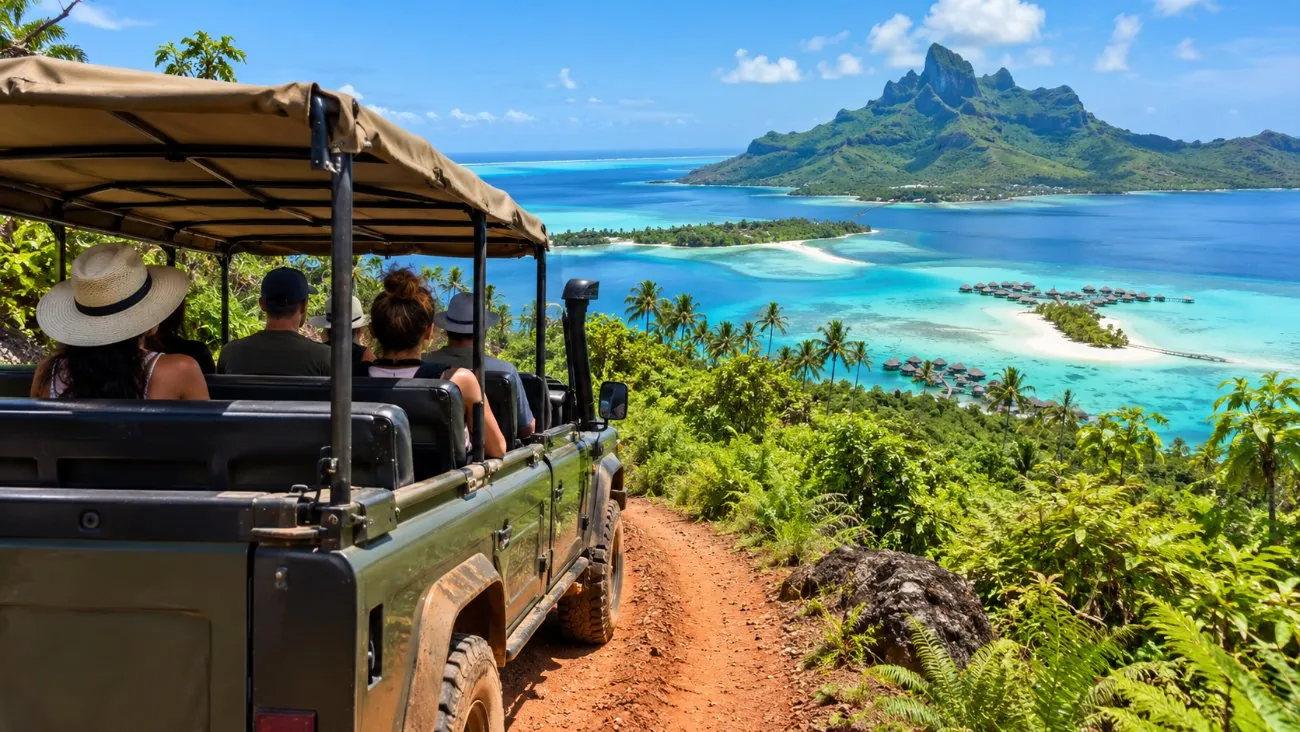
Booking choice: The lagoon safari with lunch on a motu, 6 hours. Book this Tour details
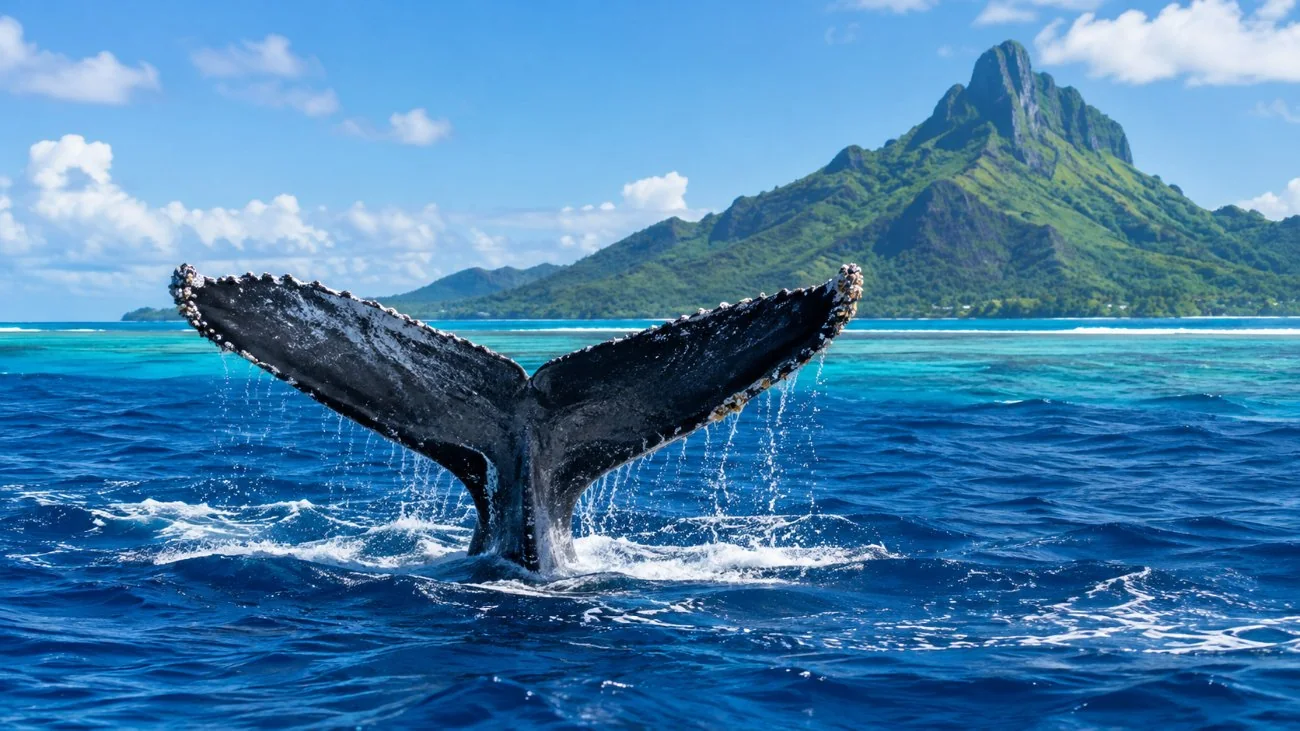
From July the humpbacks arrive from the cold waters of the far south to mate and give birth. They stay until about November. Tahiti Tourisme names Bora Bora with Tahiti and Moorea among the islands where people go whale watching, and it lists a whale operator on the island.
Lagoon tours and whale trips are not the same outing. The government bans whale watching inside lagoons, bays and passes, which rules out a jet ski convoy or a lagoon safari as a whale trip. A lagoon day and a whale trip fit together well, though, and October is a good month to try both. The full-day lagoon safari covers the rays, the sharks and a motu lunch. A licensed boat covers the whales.
The quick answer
Humpback whales are in French Polynesia from about July to November. The official observation season runs from 20 July to 20 November, from 7:30 to 17:30. Only licensed operators may approach whales: no boat inside 100 m, no swimmer inside 15 m, at most three boats within 300 m. Whale watching is banned inside lagoons, bays and passes, so lagoon and jet ski tours are not whale tours.
When is humpback whale season in Bora Bora in 2026?
From about July to November. The official window for whale watching is 20 July to 20 November, between 7:30 and 17:30.
Tahiti Tourisme gives July to November for the humpbacks' stay, when they mate and give birth in warm, sheltered water. The environment department's rules leaflet sets the dates for licensed outings: 20 July to 20 November inclusive. Local guides describe a pattern inside the season. InfoTahiti links August and September with singing males and courtship, and October and November with mothers and calves near the surface.
Numbers change from year to year. The association Oceania, which puts observers on ships between Tahiti and Moorea, counted 153 humpback sightings in August 2026. It said whales seemed fewer than at the same point in 2025, with a caveat about different survey conditions (TNTV). No month comes with a promise of a sighting.
| Period | What to expect | Source |
|---|---|---|
| July | Whales arrive; licensed outings open on 20 July | DIREN, Tahiti Tourisme |
| August to September | Singing males and courtship | InfoTahiti |
| October to November | Mothers and calves near the surface | InfoTahiti |
| 20 November | Licensed observation season closes | DIREN |
| December to June | Humpbacks gone; lagoon tours run as usual | Tahiti Tourisme |
Can you see whales from a lagoon tour or a jet ski?
Not as a whale-watching outing. Whale watching is banned inside lagoons, bays and passes, and boats without a licence must stay 300 m from any whale.
The DIREN rules are blunt: whale observation is strictly prohibited in lagoons, bays and passes. Bora Bora's lagoon has one pass, Teavanui, on the west side. Jet ski convoys and lagoon safaris work inside the reef, so neither is a whale tour, and neither listing claims to be one. A jet ski is also an unlicensed craft for whale watching. If a whale ever came close, the rule for unlicensed boats is to stay outside the 300 m observation zone.
The ocean side is different. Humpbacks swim outside the barrier reef, and you can sometimes spot a blow or a tail from shore or from a motu. Treat that as luck, not as part of a tour. The eco shark and snorkel safari listing mentions whales among the animals that may appear depending on season and weather. It lists them as a possibility, not a promise. Our guide to the best time to visit puts whale season in the context of the whole year.
What are the rules for approaching whales in French Polynesia?
Only licensed professionals may approach whales. No boat inside 100 m, no swimmer inside 15 m, at most three boats in the 300 m zone, and slow speed close by.
French Polynesia has been a whale sanctuary since 2002, and all marine mammals are protected (Tahiti Infos). The current rules have applied since 1 December 2024, according to Manu Iti Faa Ora, and they stayed in place for the 2026 season. Private boaters may not approach whales at all. A professional who breaks the rules can lose the licence for three years. A private person risks a heavy fine and up to two years in prison (Tahiti Infos). Gendarmes use drones to check.
The leaflet also bans chasing whales, circling them, blocking them against a reef, approaching head-on or from behind, and splitting a mother from her calf. An observation should last no more than 15 minutes, less with a newborn. If a whale swims towards the boat, the captain shifts to neutral and waits.
| Rule | Detail | Source |
|---|---|---|
| Who may approach | Licensed operators only; captain and guide trained | Tahiti Infos 2025 |
| Boats | Not inside 100 m of a whale | DIREN |
| Observation zone | 300 m; at most 3 licensed boats; unlicensed boats stay outside | DIREN |
| Speed | Under 3 knots within 300 m | DIREN |
| Swimmers | Not inside 15 m; at most 6 in the water with a guide | Tahiti Infos 2025 |
| Time | 15 minutes per whale; 7:30 to 17:30; 20 July to 20 November | DIREN |
| Where | Not in lagoons, bays or passes | DIREN |
Can you swim with whales in Bora Bora?
Only with a licensed operator, and the in-water encounters happen mainly off Tahiti and Moorea. Bora Bora has its own licensed whale operator for boat outings.
Tahiti Tourisme says close encounters are group outings with a certified guide, mainly in Tahiti and Moorea. Its directory lists one whale operator on Bora Bora, Tohora Bora Bora, and the DIREN leaflet names Bora Bora among the nine islands where licensed observation is allowed. Confirm the licence with the operator when you book. In 2024, 92 operators held a licence across the whole territory.
In the water, the rules are the same everywhere: no more than six swimmers, a guide with them, and a calm entry at least 15 m from the whale. The whale decides whether to come closer. Operators often ask for confident swimmers with mask, snorkel and fins. Tahiti Tourisme adds that whale song can be heard from several kilometres away.
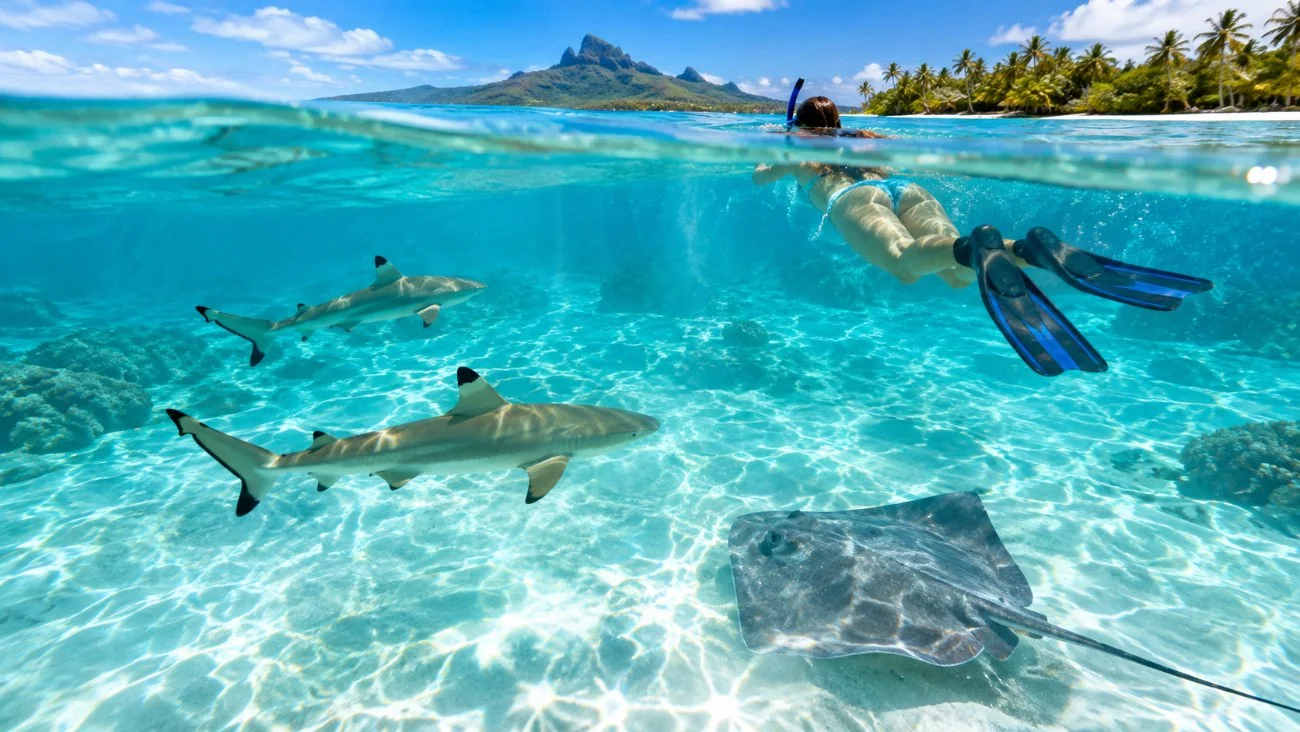
A full day on a safari boat inside the lagoon: rays, blacktip reef sharks, a coral garden and a Polynesian picnic on a motu.
Book thisWhat does whale season mean for lagoon tours in October?
Lagoon tours run as usual. October sits at the end of the drier season and in the calf period, so it is a good month to pair a lagoon day with a separate whale outing.
October is the last month of the drier season. The rainy season in the Society Islands runs from November to April, with December and January the wettest (Meteo-France). Whales stay until the licensed season closes on 20 November, which leaves a few weeks of overlap with the start of the rains.
Plan the two days apart. Whale outings follow the weather and the whales, and an operator may move or cancel a trip. The lagoon safari listing also needs good weather and a minimum number of guests, and offers another date or a full refund if either is missing. Keep the jet ski or lagoon day early in your stay and the whale outing after it, so there is room to move one of them. Our post on the 2026-2027 cyclone season covers the weather from November.
Which lagoon tour fits whale season?
The full-day lagoon safari if you want the most time in the water, the afternoon shark and snorkel trip if you want a short outing around a whale morning.
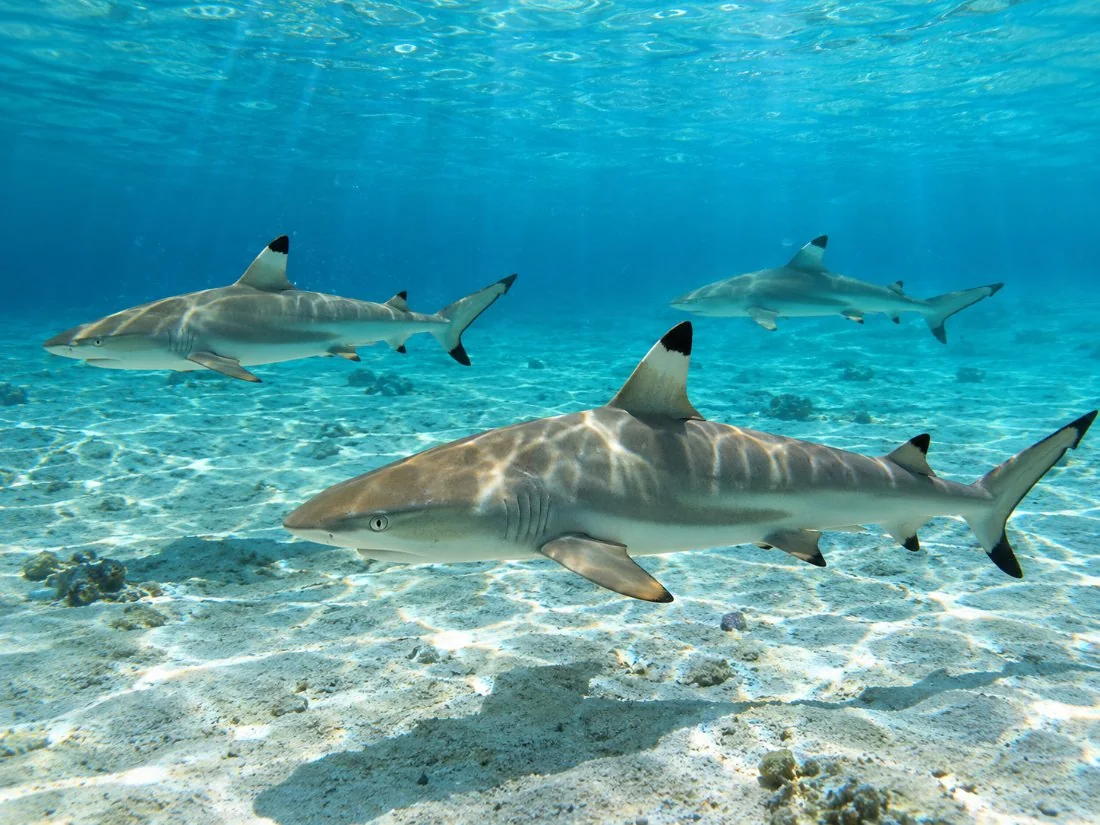
The lagoon safari is a six-hour boat day with no jet ski. Stops include rays and blacktip reef sharks, a second spot where mantas may appear (not guaranteed), a coral garden and a picnic on a motu. The boat can collect you at your hotel if it has safe sea access. Feeding animals is not allowed on it.
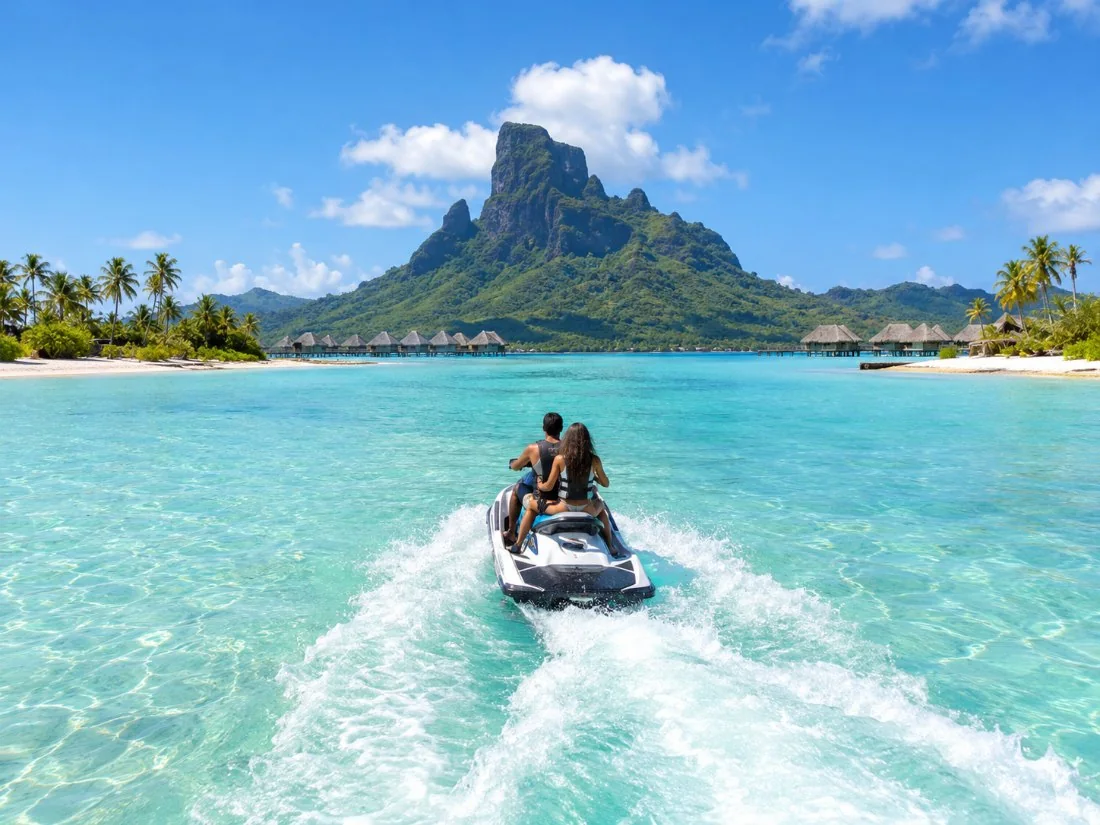
The eco shark and snorkel safari takes 2.5 hours in the afternoon. That leaves the morning free for a licensed whale outing, which can only run between 7:30 and 17:30. If you want to drive, the two-hour jet ski tour loops the lagoon with two swim stops, and our jet ski tour comparison sets the options side by side.
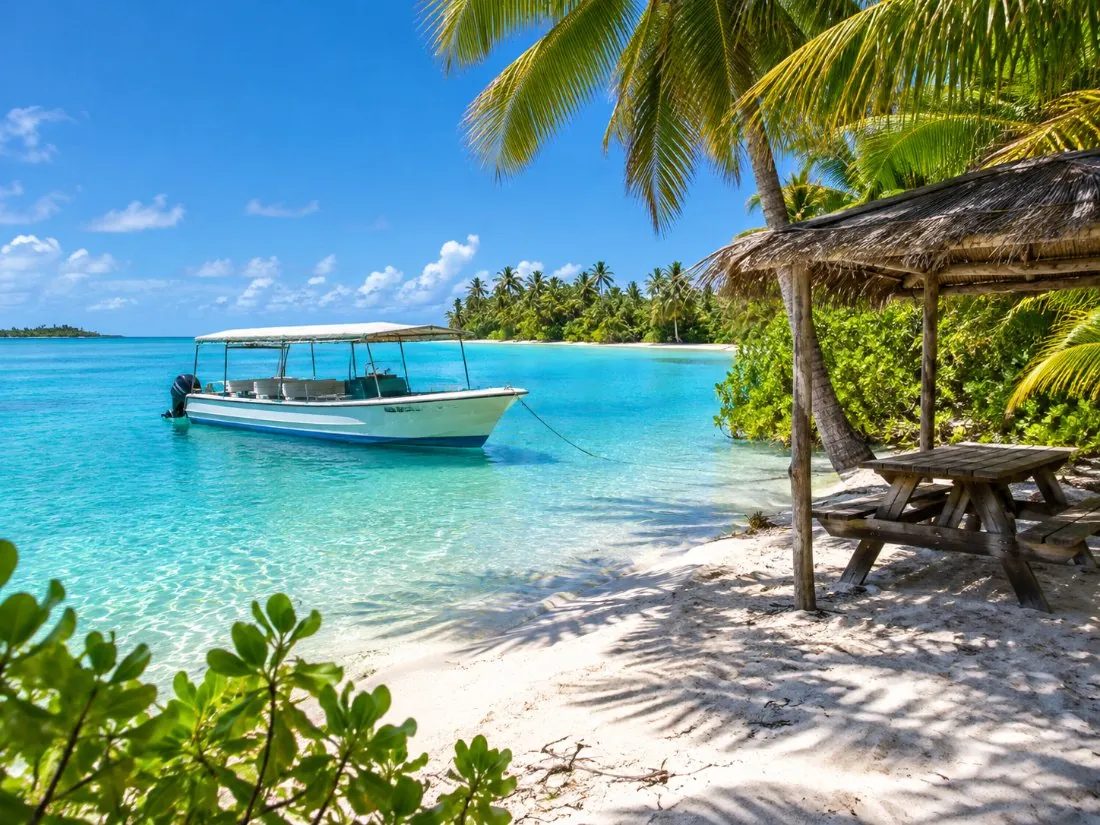
Six hours on a safari boat: snorkel stops with rays and blacktip reef sharks, a coral garden, and a Polynesian picnic lunch on a motu. Boat pickup where your hotel has sea access.
Book this Tour detailsFrequently asked questions
When can you see humpback whales in Bora Bora?
From about July to November. Licensed whale outings may run from 20 July to 20 November, between 7:30 and 17:30. October and November are the months of mothers and calves near the surface.
Can you see whales on a Bora Bora jet ski tour?
Not as part of the tour. Whale watching is banned inside lagoons, bays and passes, and jet ski tours stay in the lagoon. You may spot a blow beyond the reef from a motu by chance.
How close can you get to a humpback whale in French Polynesia?
Boats must stay at least 100 m away and swimmers at least 15 m, and only with a licensed operator. At most three boats may be within 300 m of a whale.
Is there a whale-watching operator in Bora Bora?
Tahiti Tourisme lists Tohora Bora Bora as a whale operator on the island. Ask the operator to confirm its licence for the current season when you book.
Ready to book
Choose your tour
Each option opens on GetYourGuide with the operator named and the inclusions listed.
Full-Day Lagoon Safari & Lunch on a Motu
The lagoon from a boat instead of a jet ski: rays, reef sharks, coral and a motu picnic
Eco Shark and Snorkeling Safari
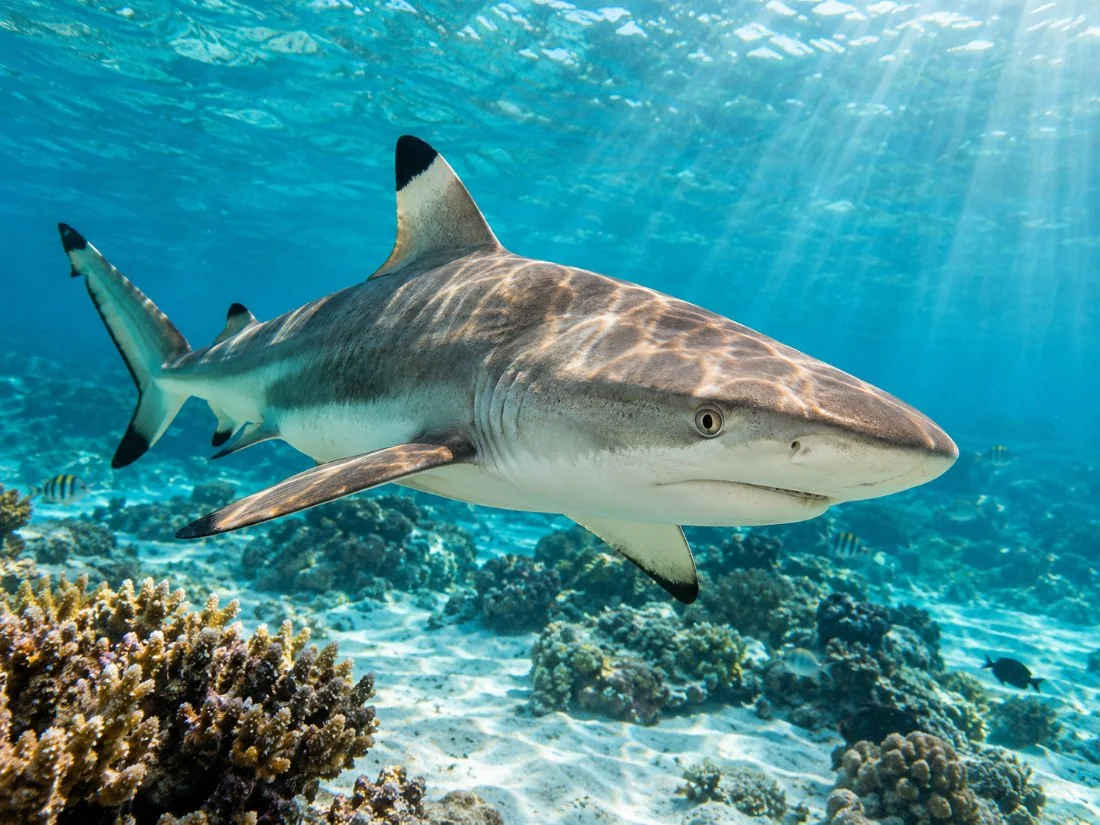
Blacktip reef sharks, rays and a coral garden by the reef
Bora Bora Jet Ski Tour Around the Island
- Pickup from your hotel or the Vaitape pier
- A local guide and all the equipment, life jacket included
- Two swim stops, one on a motu with a coconut husking demonstration