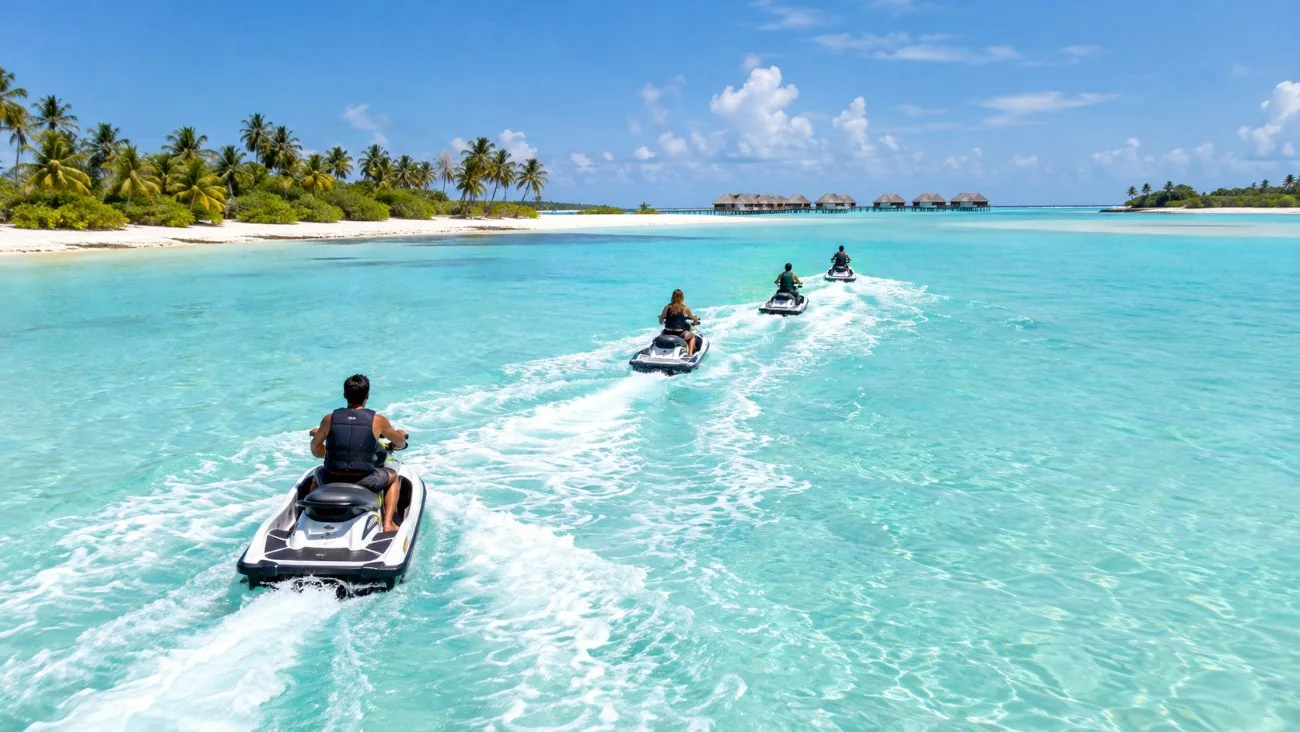
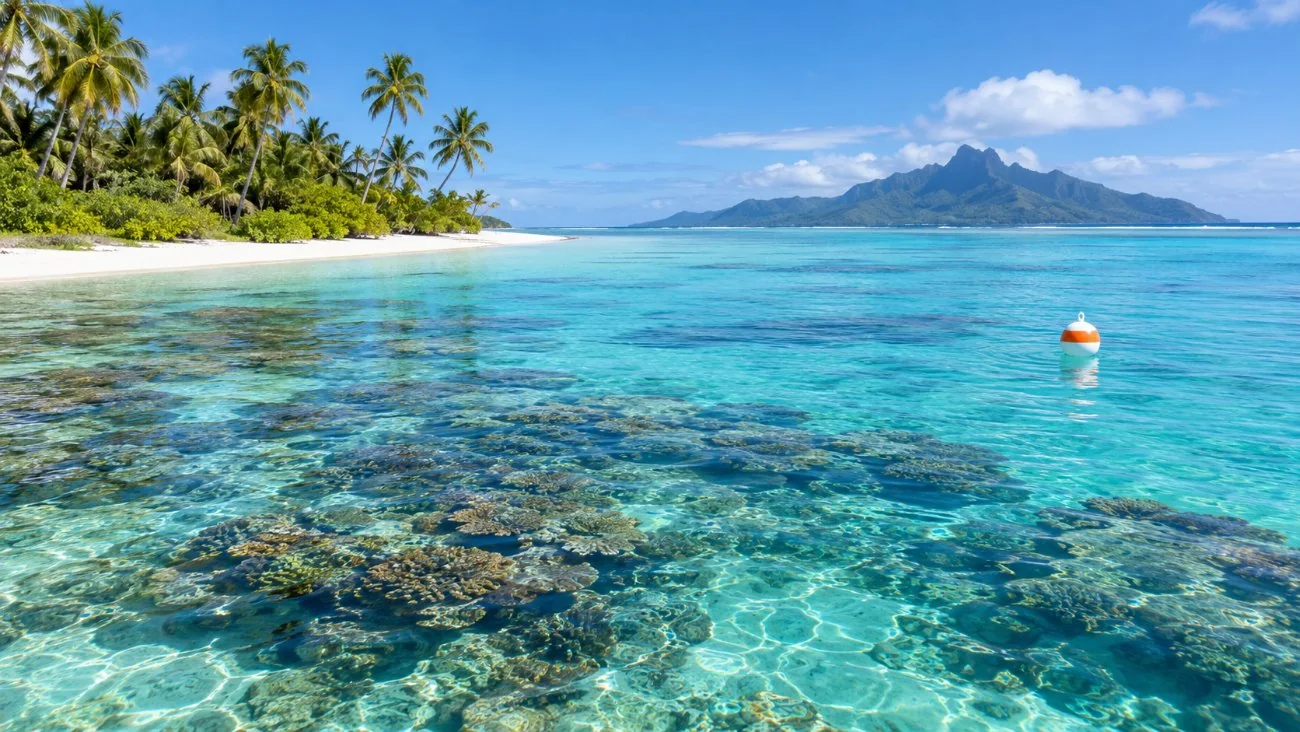
Booking choice: The eco shark and snorkeling safari, 2.5 hours. Book this Tour details
Bora Bora has closed part of its lagoon. Not a small swimming area, like the buoyed square in Povai Bay that jet skis must keep out of, but a band of reef more than seven kilometres long at the southern end of the island. Inside it, nobody may fish, swim, anchor or drive a boat. Local people call it a rahui, the Polynesian word for a traditional ban that lets a place rest.
For a visitor the change is small but real. The rest of the lagoon stays open, and jet ski convoys and snorkel boats still run. They now plan their routes around a zone that did not exist a year ago. Below: the rules, the dates, and how to pick a tour that fits them, such as the afternoon shark and snorkel safari.
The quick answer
The reserve covers about 574 ha on the southern reef off Matira: a band 7.2 km long and 750 m wide, 500 m on the lagoon side of the barrier reef and 250 m on the ocean side. The government created it in December 2025 and it came into force on 23 September 2026 for two years. Inside it, boat traffic, mooring, fishing, swimming and water activities are banned. Jet ski and snorkel tours still run in the rest of the lagoon.
What is the Matira reef reserve in Bora Bora?
A category 1 strict nature reserve, the highest protection level in French Polynesia's environment code. It is the first lagoon reserve in the territory where all activity is banned.
The local name is Popora Rahui, after an old name of the island. The French Polynesia assembly approved the project in November 2025, according to Outremers360, and the Council of Ministers created the reserve on 17 December 2025. The zone sits on the southern reef of Matira, in the district of Nunue. TNTV describes it as running from Pointe Turiroa towards Matira, on both the lagoon side and the open-sea side of the reef.
The ban is wide. One summary of the decree lists movement and mooring by any means of transport, fishing and taking marine life, water activities, and noise that can disturb the area. The rules apply to visitors and residents alike. You may also see a figure of 700 ha in some reports. The figure in the decree is 574 ha.
| Item | What the reports say |
|---|---|
| Area | About 574 ha |
| Size | 7.2 km long, 750 m wide |
| Position | Southern reef off Matira: 500 m into the lagoon from the barrier reef, 250 m on the ocean side |
| Protection | Category 1 strict reserve (rahui) |
| Banned | Boat traffic, mooring, fishing, swimming and water activities, disturbing noise |
| In force | From 23 September 2026, for two years |
| Managed by | The commune of Bora Bora with a local committee, the Tomite Poporahui |
When did the Matira rahui start, and how long does it last?
Enforcement began on 23 September 2026. The first period runs for two years, after which the effect on the lagoon is assessed.
The project is older than the decree. A research programme called Bora-Biodiv started in 2019. The commune held consultations in 2021 and 2022 with fishers, churches, associations and tourism businesses. A public inquiry followed in late 2024, which Tahiti Infos covered from the town hall. The assembly vote and the government decree came at the end of 2025.
Between December 2025 and September 2026 the next steps were marking the limits on the water and writing a management plan, as Pacific Puddle Jump reported in February. On 8 September 2026 TNTV announced the start date: 23 September. The zone is closed for two years. After that, scientists will measure what changed, and the results will decide what happens next.
| When | What happened |
|---|---|
| 2019 | Bora-Biodiv study begins; fish found smaller, fewer giant clams and sea urchins than in 2006 |
| 2021 to 2022 | Consultations with residents, fishers and tourism businesses |
| October to November 2024 | Public inquiry on the project |
| November 2025 | French Polynesia assembly approves the reserve |
| 17 December 2025 | Council of Ministers creates the reserve |
| 23 September 2026 | Rules enforced on the water, for two years |
Can jet skis and tour boats still go near Matira?
Near it, yes. Into it, no. Any boat or jet ski has to stay outside the zone, and that includes guided convoys.
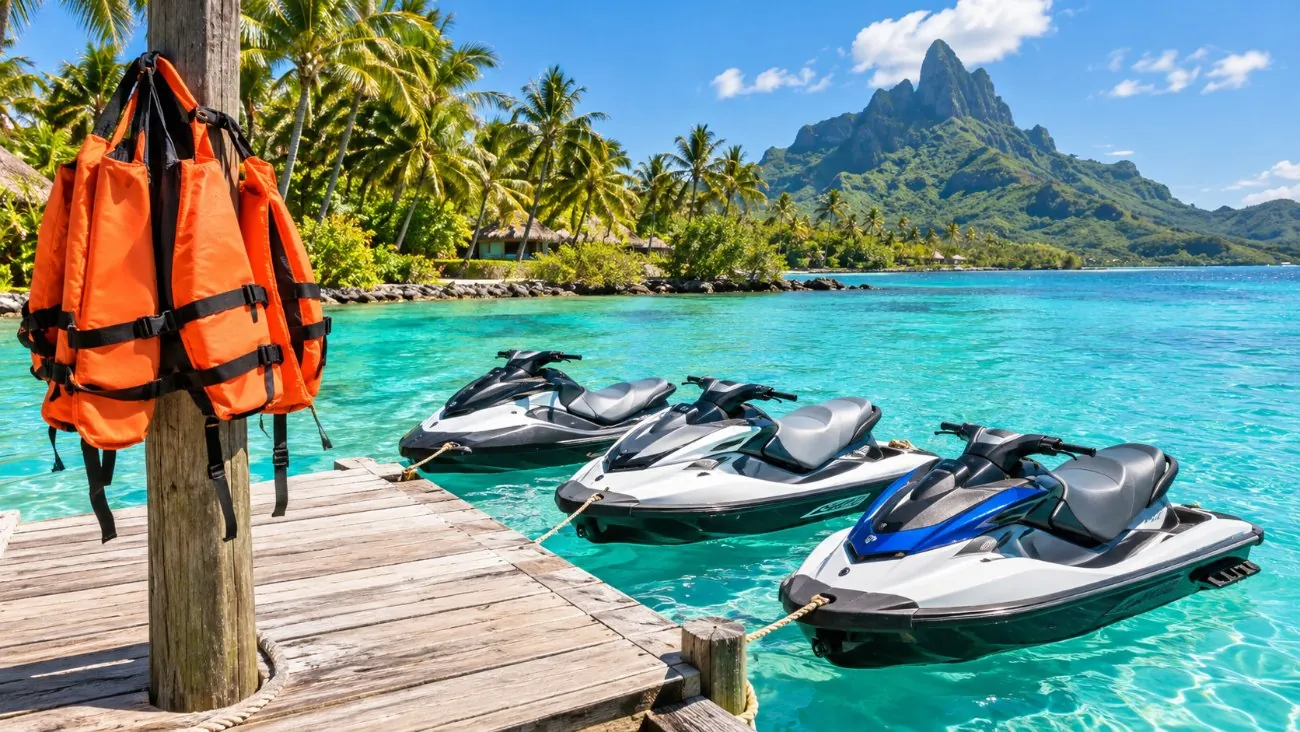
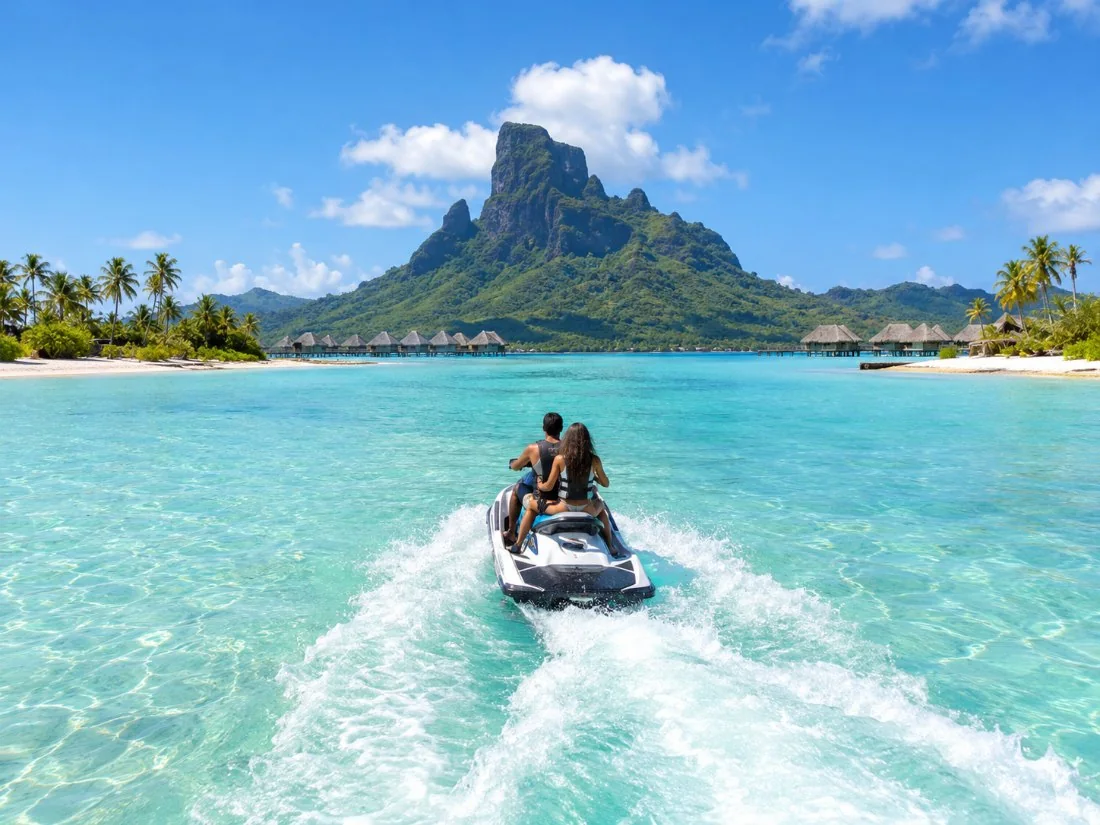
The reserve does not close the island or the rest of the lagoon. It closes one band along the southern reef. A jet ski tour that circles the island still passes the south coast. The guide has to keep the convoy outside the limit, the same way convoys keep out of the buoyed swimming area in Povai Bay. Our guide to the jet ski rules covers the other no-go areas.
Enforcement is real. Two agents watch the site seven days a week and work with the municipal police and the gendarmerie, according to TNTV. A breach is a fifth-class offence, the highest class of fine for minor offences in French law. Global Conservation, which funds part of the work, says a patrol boat, a marine radar and cameras send alerts to the patrol team. Exceptions need the committee's approval. The decree names one: the canoes of the Hawaiki Nui Va'a race may cross the zone, without motor support boats.
Note the dates of the canoe race. The 2026 edition runs from 28 to 30 October and finishes at Matira Beach, according to Tahiti Tourisme. In past editions the maritime authority has closed race zones to other boats (a 2018 order did so on all three race days). If your tour falls on the finish day, ask the operator whether the route or the timing changes.
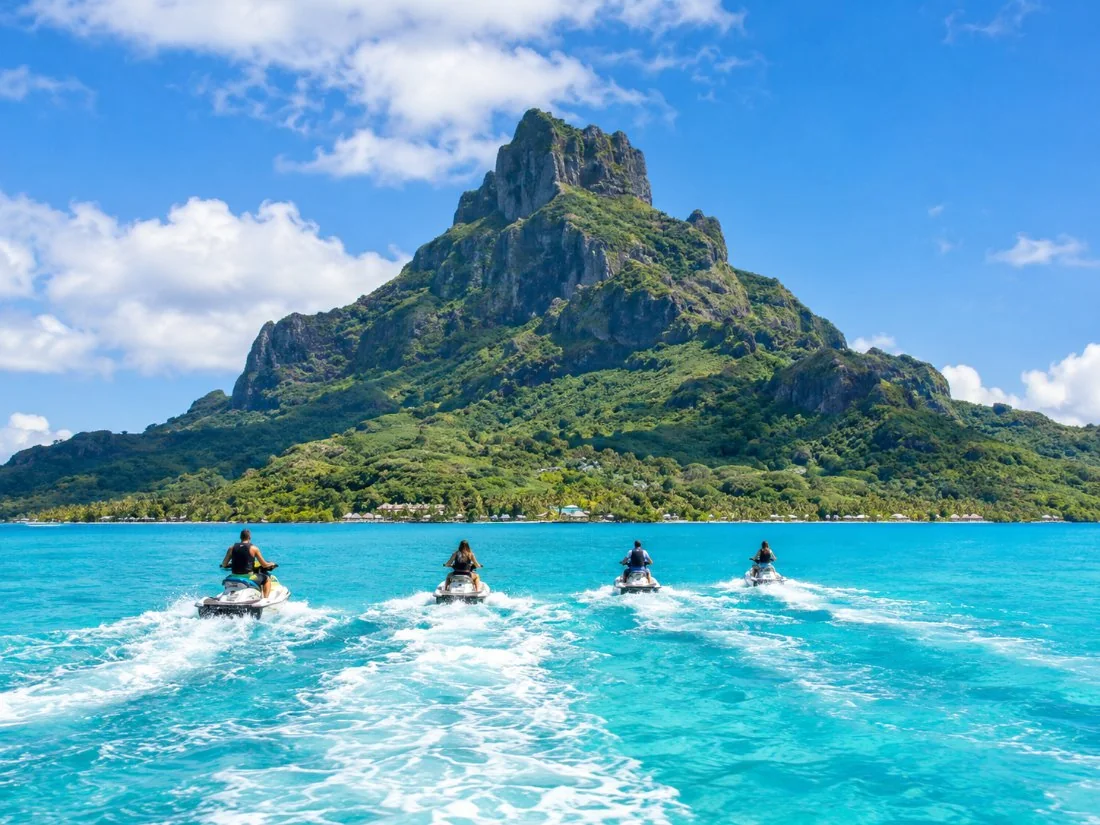
A two-hour guided loop of the lagoon with two swim stops and a coconut demo on a motu. Pickup from your hotel or the Vaitape pier.
Book thisCan you still swim at Matira Beach?
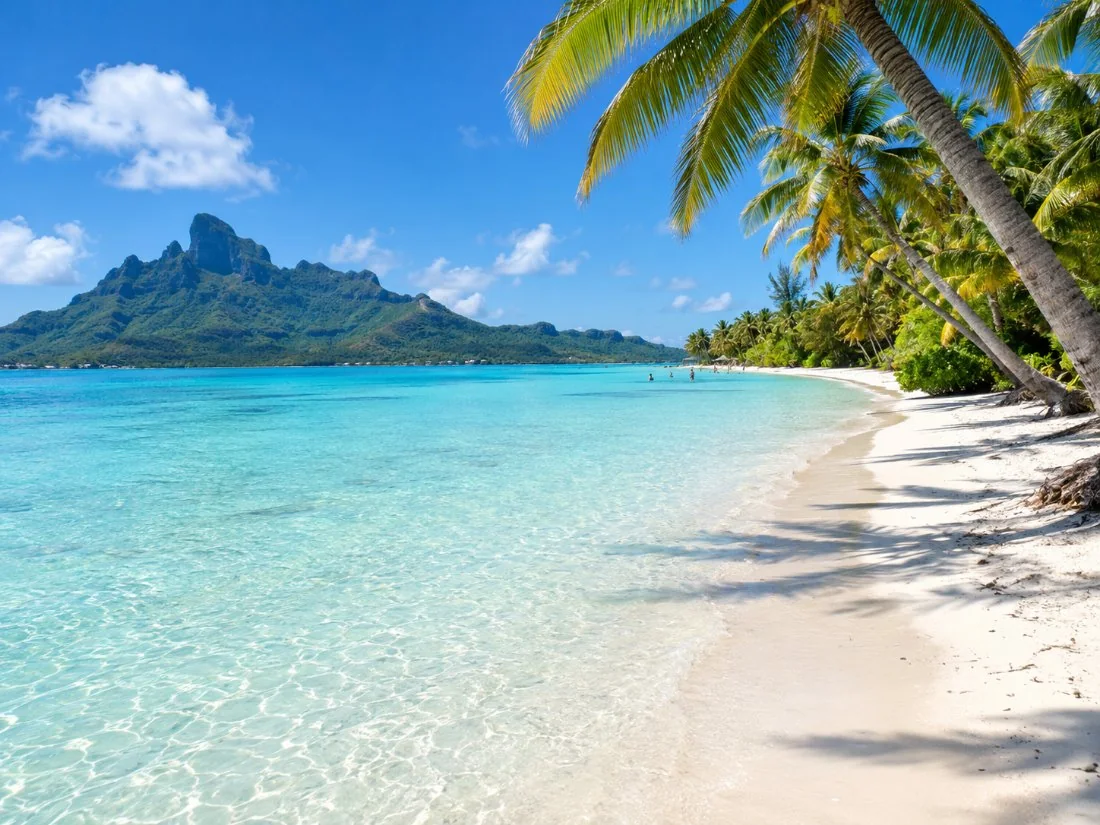
Yes. The reserve is measured from the barrier reef, not from the beach, and none of the official reports lists Matira Beach as closed.
Matira Beach is the public beach on the main island, and swimming there carries on. The closed band starts at the barrier reef and reaches 500 m into the lagoon. The lagoon between the beach and that band stays open. Where the limits are marked on the water, keep outside them, on a kayak, on a paddleboard or with a snorkel.
If you planned to kayak or snorkel out to the southern reef from Matira, pick another spot. The ban covers swimming and water activities as well as boats, and visitors are not exempt. If you are unsure where the line runs, ask at your hotel desk or at the town hall in Vaitape.
Why did Bora Bora close part of its lagoon?
Fish in the lagoon had become smaller and fewer. The reserve gives one rich section of reef time to recover and to restock the rest of the lagoon.
The commune asked CRIOBE, the research station on Moorea, to compare the lagoon in 2019 with data from 2006. The result, reported by TNTV: plenty of fish, but many too small to breed, and fewer giant clams (pahua) and sea urchins (vana). The Bora-Biodiv study also pointed to heavy pressure from tourism, especially noise from boats (Outremers360). About 78% of the fish caught on the island is eaten locally, so the lagoon is a food source as well as a view.
The southern Matira reef was chosen because surveys found it among the richest areas for fish and shellfish. It is also one of the busiest. Residents asked for a rahui in the consultations. Some subsistence fishers worried about losing access, and the commune discussed help for them to reach other open areas.
Where can you still snorkel with sharks and rays in Bora Bora?
Across most of the lagoon. Snorkel boats use spots such as the coral garden near Motu Toopua in the west and the manta area off Anau in the east.
The lagoon is an Important Shark and Ray Area on the ISRA factsheet, for spotted eagle rays and reef mantas, with blacktip reef sharks, lemon sharks and pink whiprays also recorded. Air Tahiti Nui names the coral garden at Motu Toopua, Anau for mantas and Motu Tapu, south of Teavanui Pass, for the number of fish. None of those is in the Matira reserve.
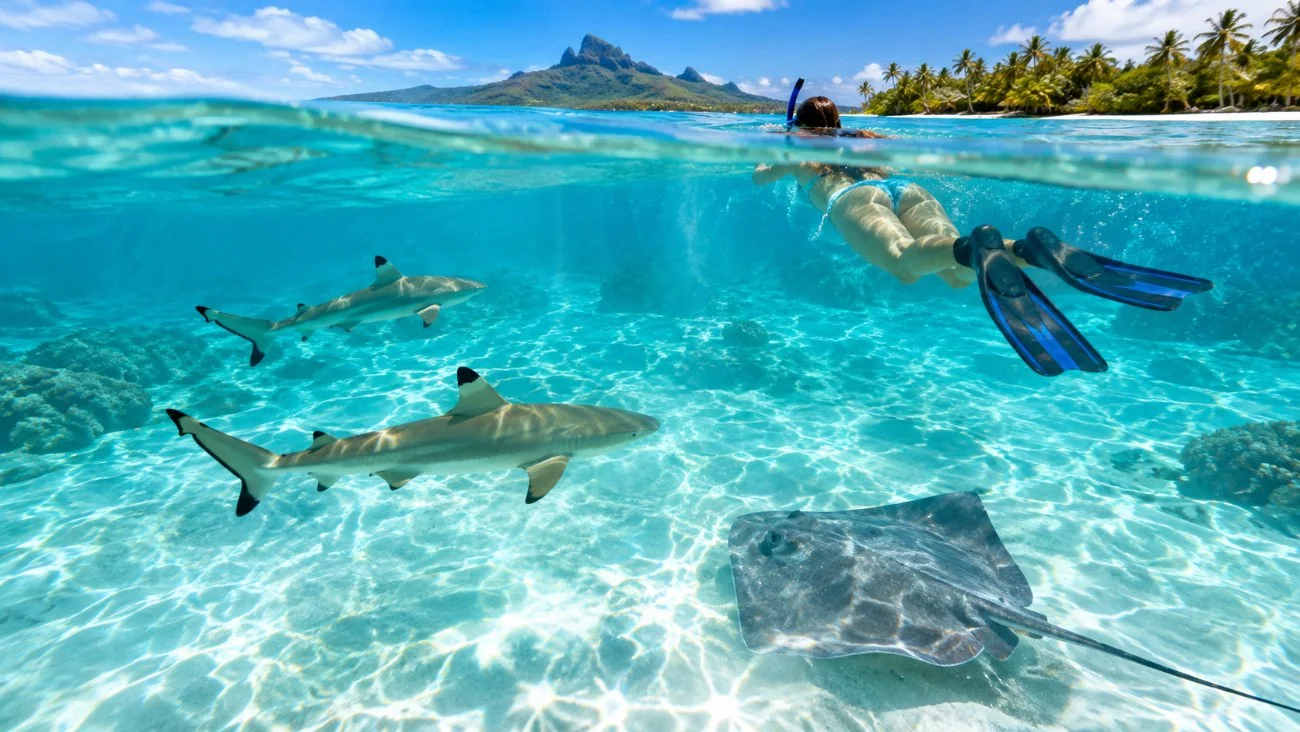
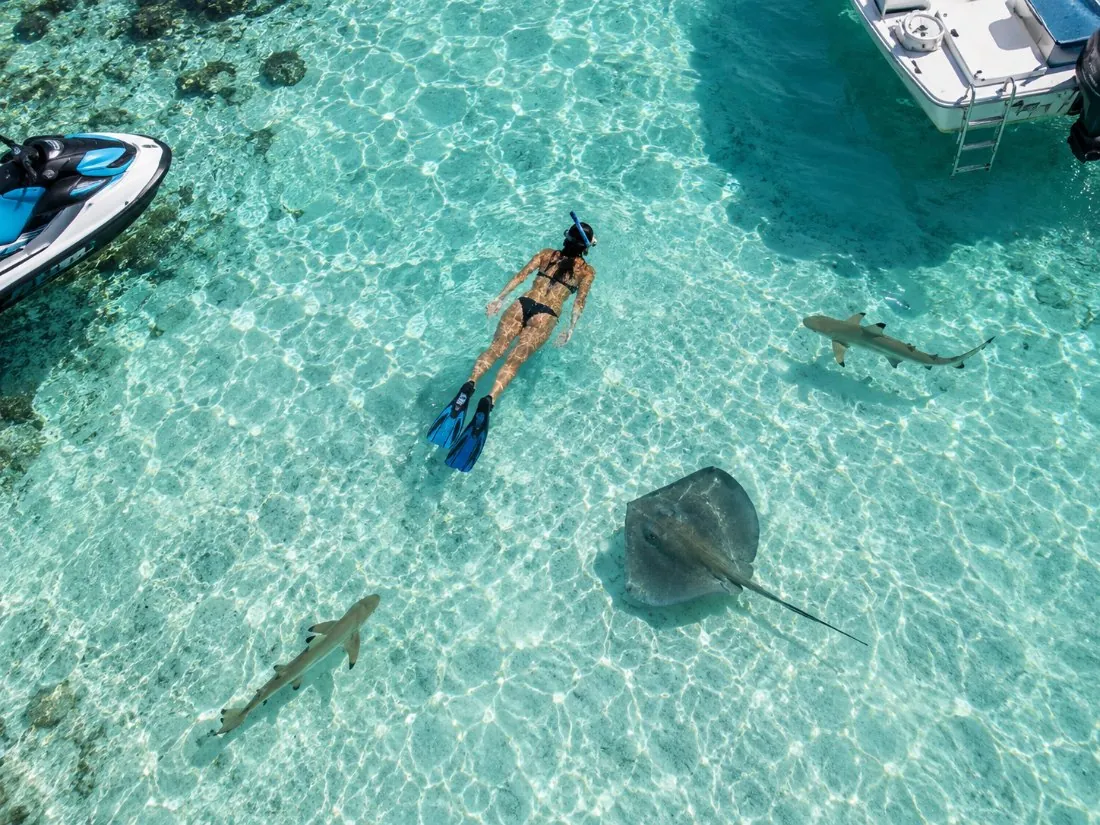
The eco shark and snorkel safari is a 2.5-hour afternoon trip by motorboat with several snorkel stops. The listing names blacktip reef sharks and rays as the highlights, says sightings are not guaranteed, and includes snorkel gear and light food and drinks. If you would rather ride, the jet ski and shark-ray safari day adds the same kind of boat snorkel to a two-hour jet ski loop and lunch. Feeding sharks and rays is prohibited, and Moana Adventure Tours, which runs both, says it does not feed the animals. Our guide to sharks and rays explains what you see and how to behave in the water.
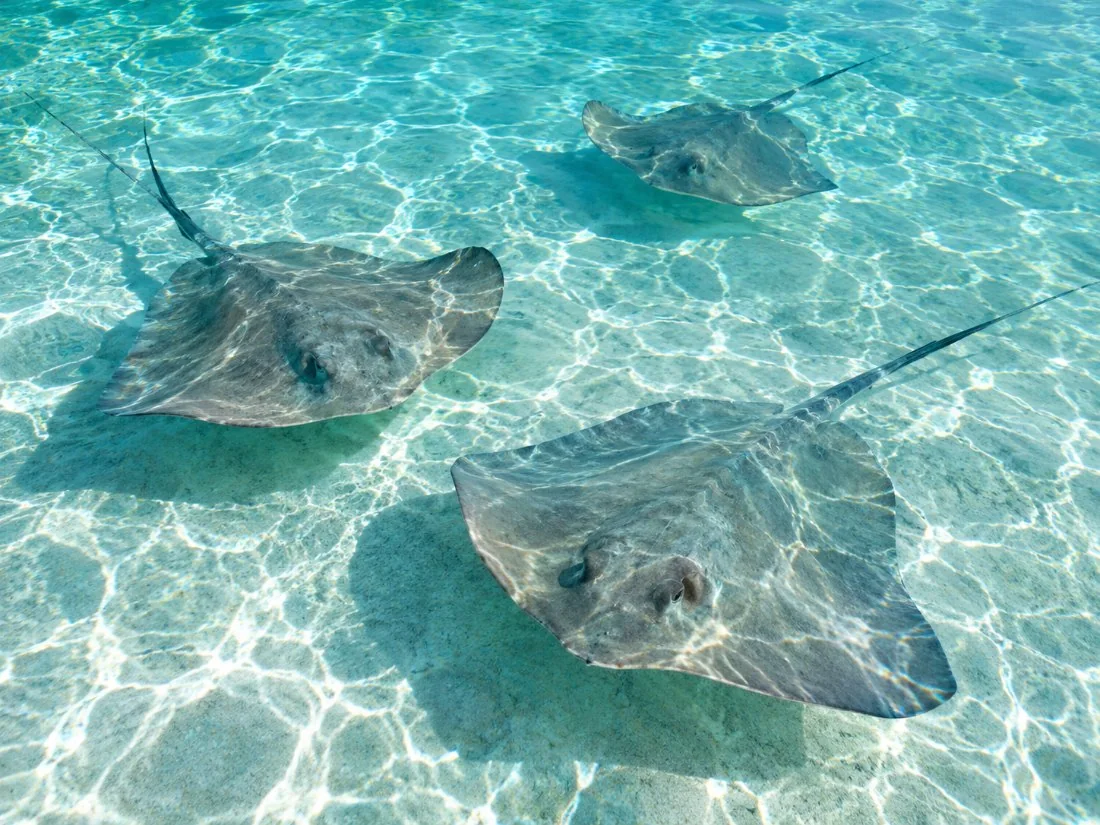
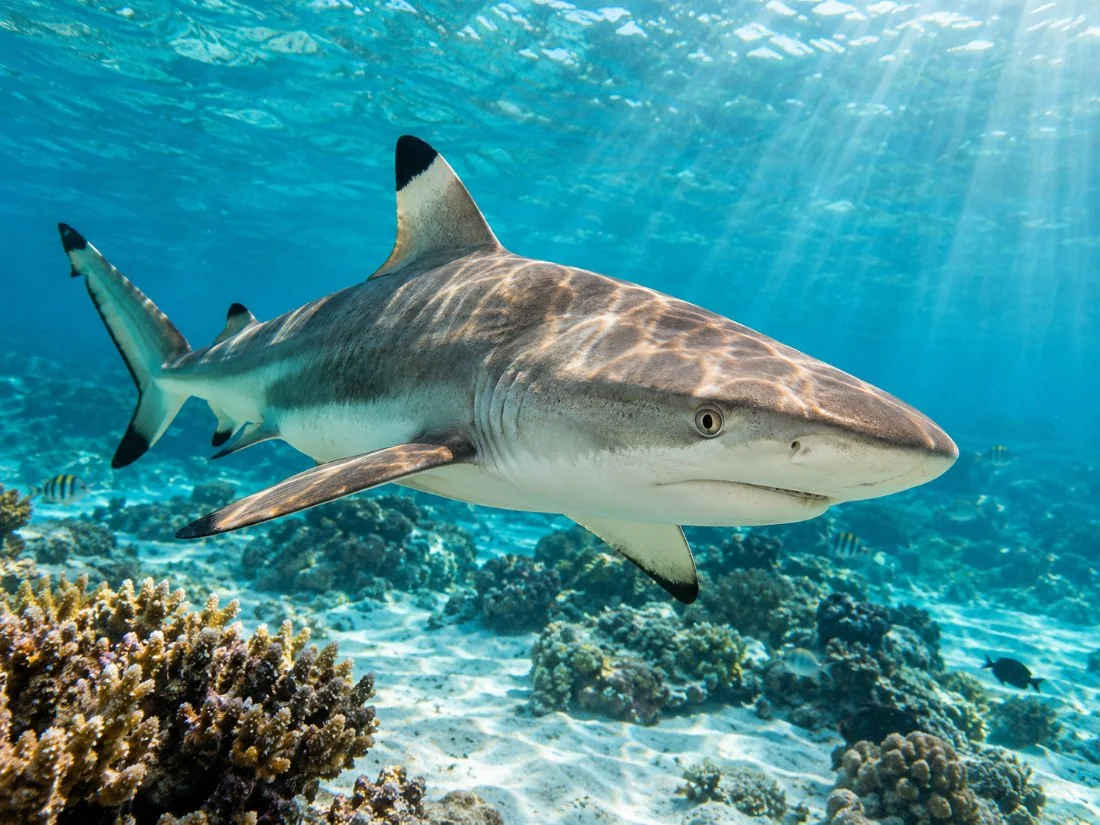
An afternoon by motorboat with several snorkel stops for blacktip reef sharks, rays and a coral garden near the barrier reef. Snorkel gear, food and drinks are in the listing.
Book this Tour detailsFrequently asked questions
What is banned in the Matira reserve?
Boat traffic and mooring by any means, fishing and taking marine life, swimming and other water activities, and noise that could disturb the area. Exceptions need the approval of the local management committee.
Is the Bora Bora lagoon closed to tourists?
No. Only the band of about 574 ha along the southern reef off Matira is closed. The rest of the lagoon is open, and jet ski and snorkel tours continue outside the reserve.
How long will the Matira reserve stay closed?
The first period is two years from 23 September 2026. After that, the effect on fish and shellfish will be measured and the results will decide the next step.
Do jet ski tours still go past Matira?
Tours that loop the island still pass the south coast, outside the reserve. Guides keep the convoy out of the closed band. Ask the operator about the route on the day if it matters to you.
Ready to book
Choose your tour
Each option opens on GetYourGuide with the operator named and the inclusions listed.
Eco Shark and Snorkeling Safari
Blacktip reef sharks, rays and a coral garden by the reef
Bora Bora Jet Ski Tour Around the Island
- Pickup from your hotel or the Vaitape pier
- A local guide and all the equipment, life jacket included
- Two swim stops, one on a motu with a coconut husking demonstration
Jet Ski, Lunch & Shark and Ray Snorkel Safari
- Hotel pickup and drop-off
- A two-hour guided jet ski tour of the island
- Lunch at a restaurant on the main island